Congregation Beth Ami
Home
News & Events
About Us
Facilities
Life Cycle Events
Links
Contact Us
Calendar
Forms/Applications
4676 Mayette Ave., Santa Rosa, CA 95405, 707 360-3000

Celia Gurevitch Jewish Community Library

@ Congregation Beth Ami
  • Home
  • About
  • Catalog
  • DVDs
  • Hours
  • Programs

Archive for October 2008

« Previous Entries

Breakfast @ the library

31st October 2008, 03:59 pm

Please join us this Sunday for this month’s “breakfast @ the library.” We will have bagels, cream cheese, orange juice, tea and coffee for you. Not to mention new books and DVDs.

Category: Events  |  Comment

Studying Talmud

31st October 2008, 03:51 pm

Maggie Anton explained on Wednesday why it is important to study Talmud, particularly for women. The way I understood her message is that those make the law, who know the texts. When women, who finally have a chance to learn Talmud, reach similar level of scholarship and expertise as men, they will be included in that circle. There are signs, even within the orthodox community that this is happening. Besides, studying itself is a rewarding process.
First of all I would like to recommend to join Rabbi Schlesinger’s Talmud class, that alternates with his Torah class every second Thursday evening. Second, we have several copies of the Talmud, including all three of the best editions: Steinsaltz, Soncino and Schottenstein. Furthermore we have books that can guide you in the process. Here are some of them:

I already blogged about Marc-Alain Ouaknin’s “The burnt book; Reading the Talmud,” a postmodern work discussing spirituality and religious practice with such concepts as deconstruction, intertextuality, undecidability, multiple voicing, and eroticism in the Talmud.

I also wrote a review of Jacob Neusner’s “Learn Talmud,” a teach yourself textbook written for 7th-8th graders

I wrote about Jacob Neusner’s “Invitation to the Talmud” as well. I did not mention though, that we have the book’s second and revised edition that includes the Hebrew texts.
As mentioned above we have all available volume of the wonderful Steinsaltz Talmud. To help you studying it we also have Juditch Z. Abram‘s “Learn Talmud“. I believe this is the most important segment from the introduction.

AbramsThis book is designed to help you over the initial hurdles of Talmud study. In it, selected passages, which are among the most accessible in the two tractates presently translated by Rabbi Steinsaltz, are presented with aids for study. You might be able to enter the world of the Talmud with just the Steinsaltz translation and the aid of this book alone. However, I urge you to study with a teacher.
Alternatively you can turn to the source himself. The very first book I read on the topic (in 1991) was Adin Steinsaltz: The essential Talmud. Its three main sections (history, content/ structure and method) helped me to familiarize myself with the basics of this vast work. I am certain it can do that for you too.
Or you can opt to use Cohen‘s “Everyman’s Talmud” as an introduction. It was published in 1949 and the language feels a bit outdated to me. But the structure of the book actually allows you to get a beginning grasps of the Talmud itself. The major sections are:

  • The doctrine of G-d
  • G-d and the universe
  • The doctrine of man
  • Revelations
  • Domestic life
  • Social life
  • The moral life
  • The physical life
  • Folk-lore
  • Jurisprudence
  • The hereafter

Finally those of you who like literary analysis will find David Kraemer‘s “The mind of the Talmud: an intellectual history of the Bavli” fascinating.

KraemerThis critical study traces the development of the literary forms and conventions of the Babylonian Talmud, or Bavli, analyzing those forms as expressions of emergent rabbinic ideology. The Bavli, which evolved between the third and sixth centuries in Sasanian Iran (Babylonia), is the most comprehensive of all documents produced by rabbinic Jews in late antiquity. It became the authoritative legal source for medieval Judaism, and for some its opinions remain definitive today. Kraemer here examines the characteristic preference for argumentation and process over settled conclusions of the Bavli. By tracing the evolution of the argumentational style, he describes the distinct eras in the development of rabbinic Judaism in Babylonia. He then analyzes the meaning of the disputational form and concludes that the Talmudic form implies the inaccessibility of perfect truth and that on account of this opinion, the pursuit of truth, in the characteristic Talmudic concern for rabbinic process, becomes the ultimate act of rabbinic piety.

I hope you will use these resources in your study.

Category: Books  |  Comment

Help/truck needed

30th October 2008, 05:28 pm

As you may know Bradley video is closing several of its stores. They are even selling the fixtures. I am thinking of buying one of their DVD racks to replace the current furniture in the library that has the VHS tapes in its side and the DVDs and new books on its top. However Bradley’s DVD shelves did not fit in the truck I borrowed, because the truck’s shell could not be taken off. I am wondering whether a reader of this blog has a pick-up truck that we could use to transport the shelves from the store (at Piner and Marlow) to the library. Let me know if you do and are available to help with it.

The DVD shelves needing to be moved are 4x4x2 feet.

Thank you in advance.

Category: About  |  1 Comment

Author lecture report

30th October 2008, 03:11 pm

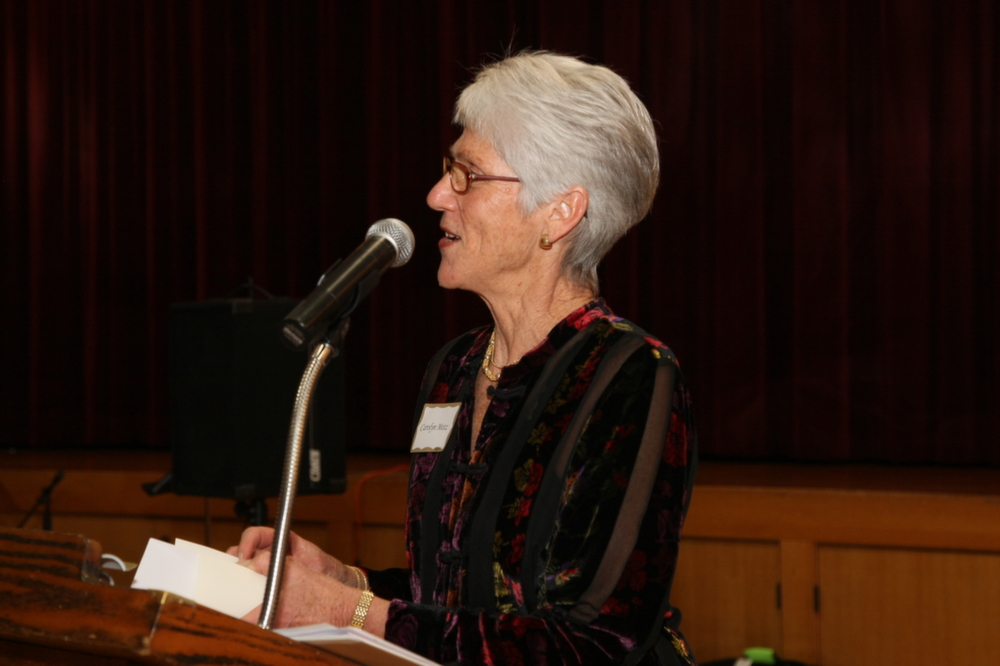
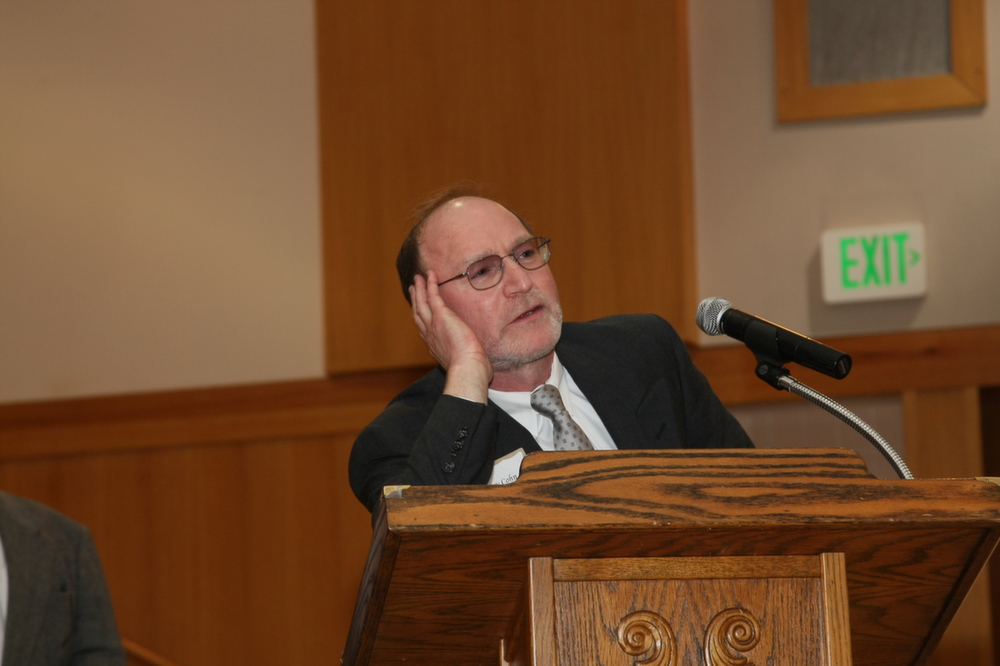
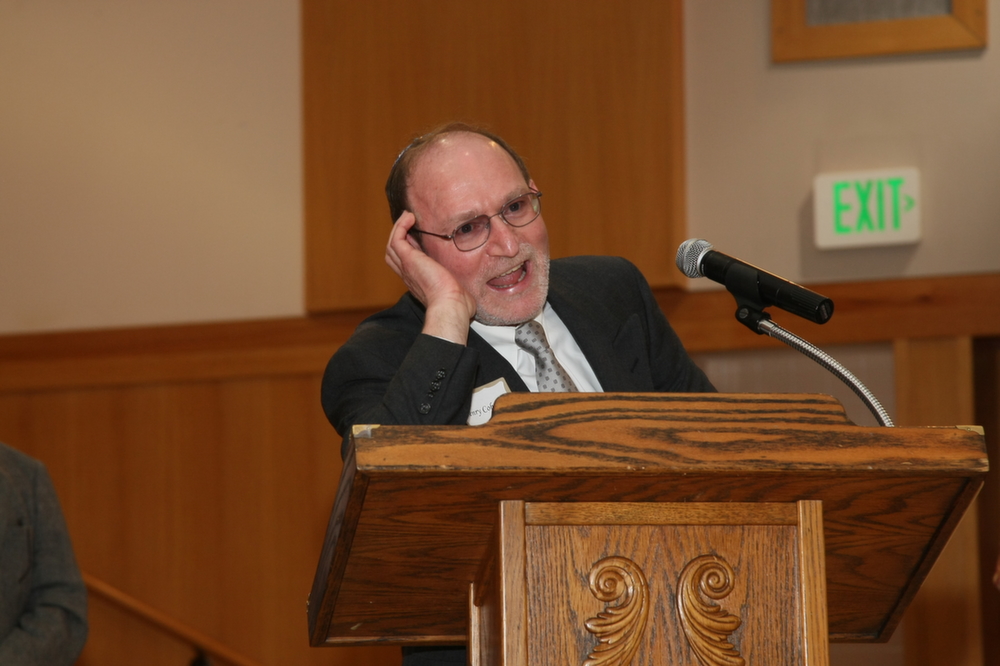
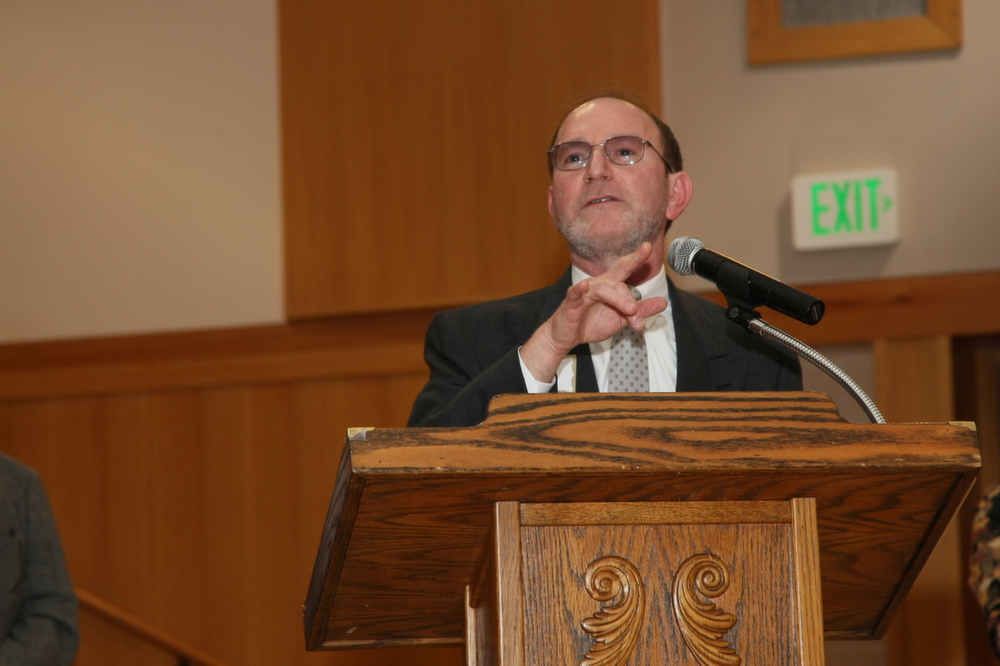
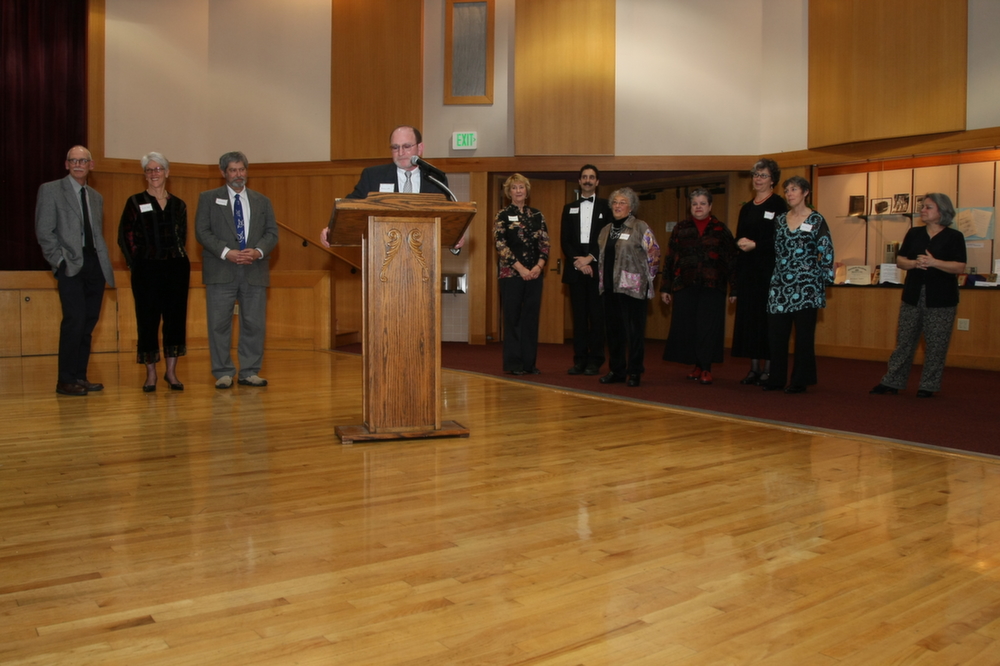
Thank you all 20-25 of you who came out last night to hear Maggie Anton‘s lecture. The small crowd (see picture at the end of this post) was enthusiastic enough to hear Maggie’s fascination stories about Rashi, how she got interested in the topic, the future of Talmud scholarship and 12th century renaissance. These were just some of the topics she covered with her energetic and funny talk. I hope we can get her to come back when the last installment of her Rashi’s daughter trilogy will be out next summer.

Maggie talked about the importance of studying Talmud. Tomorrow I will post a message intended to support you to do so. I am also planning to post a short video on YouTube from her talk. Finally, her latest book, the Secret Scholar will be available in the library after I catalog it next week.

As usual I would like to recount some of the lessons I learned:

  • The Bohemian’s deadline is Friday noon before the week of publications and add run for two weeks.
  • Every detail needs to be fixed in advance, nothing should be left assumed. In our case we had a slight miscommunication about Maggie’s lodging, but thankfully an old friend of hers volunteered to host her just in the nick of time.
  • I need to be familiar with the layout of the meeting location, i.e. check out in advance if I am not familiar with it. Case in point Golden Gate transit’s bus stop it Maple @ Brookwood, is not actually on either of those streets and the salespeople at the nearby shops had no idea where the stop might be. Similarly, the same bus downtown does not actually drop you off at the main Transit Mall, where the sign is. The bus stop is on the crossroad.
    Put on the kettle early enough so people could have tea/coffee in case the room gets chilly.
  • If I want to invite people to dine with our guest I need to ask them in advance whether they are interested and/or available.
    Need to find a way to reach Shomrei Torah members.
  • Get someone to take pictures. I did not manage to make any good ones; the one below is the best.

Maggie Anton

Audience

Category: Events  |  2 Comments

Living and Dynamic Judaism

30th October 2008, 12:48 pm

B’nai Israel congregation in Petaluma has two adult education classes going, both taught by Rabbi Ted Feldman. The Introduction to Judaism started this Monday. For this class they are using “Living Judaism: The complete guide to Jewish belief, tradition & practice” by Rabbi Wayne Dosick. A few months ago an elderly, non-Jewish came to the library and asked for this very same book. Turns out a rabbi recommended it to him as the best starting point to get to know Judaism. If two different rabbis recommended it, it must be excellent, right? Here is the short description of the book from its cover:

Combining the worlds of quality scholarship and sacred spirit, Living Judaism is an engaging overview of the Jewish faith – a perfect introduction for people with little knowledge of Jewish history, tradition, or practice and an equally thought-provoking guide for those already steeped in Jewish life. Writing in language that is clear, simple, and direct, Rabbi Dosick makes complex ideas and issues easy to understand. This very same book was recommended by

Rabbi Feldman’s other class, “The Teachings of Rabbi Mordecai Kaplan, started last week, using Dynamic Judaism: The essential writings of Rabbi Mordecai M. Kaplan,” edited by Emanuel S. Goldsmith and Mel Scult. For those of us who did not know Rabbi Kaplan was the founder of Reconstructionist Judaism, who passed away at age 102 in 1980.

“Reconstructionism eschews belief in a supernatural deity but stresses the ethnicity, folkways, and cultural aspects of the Jewish faith. This intelligently organized anthology contains excerpts from Kaplan’s basic writings which elucidate his theology, teachings, and suggestions for the continuance and survival of the Jewish religion. An excellent introduction to Reconstructionism for general readers and should be in most Judaica collections.”

We have both books for your perusal.

Category: Books  |  Comment

Scliar: The centaur in the garden

29th October 2008, 01:39 pm

The next meeting of Sonoma State University Library‘s Jewish Literature Reading and Discussion Series is this Thursday from 12:00 pm to 2:00 pm in room 3001 of the University Library. The topic of the lecture and discussion is Moacyr Scliar’s (pictured) The Centaur in the Garden. If you plan to attend I can email the questions compiled by Professor Anne Goldman to give some ideas for discussion.

As this very same book is also featured in our book discussion group (in February 2009) I am inclined not to tell you much about the story in advance. As of this moment I am 3/4th way through it right now and it has been a great ride and read. It is “a novel about a centaur who is Brazilian and Jewish, who falls in love and marries, who is loved by another creature as delightful as he, and who possibly discovers the mystery of his life.” This description is from the cover of the library’s copy, which happens to be the first English edition from 1984. The book was written in 1980 in Portuguese.

A literary critic, Ilan Stavans, described the work in these words, “Scliar is a world-class fabulist with a solid and distinguished oeuvre awaiting discovery by a larger audience. I’ve seen The Centaur in the Garden compared to works by Franz Kafka, Nikolai Gogol, Philip Roth, Mordecai Richler, and even John Updike. … Scliar pushes the tragic destiny of Tartakowsky through an infusion of comedy. Its style is vintage Scliar: crisp, speedy, cinematic, succinct.”

Whether you are going tomorrow to SSU or join our bookclub discussion in February or not I am sure you will have a multifaceted experience if you read this book. It is tragedy, comedy, fantasy, family-drama, love story, all in one.

Category: Books, Events  |  Comment

Anton: Secret Scholar

28th October 2008, 03:22 pm

As (hopefully) most of you know tomorrow Maggie Anton, the author of the successful Rashi’s daughters series will come and discuss her historical novels and how Jewish women in Medieval France can be an inspiration to us today. She already finished two of the three volume series, one volume about each of Rashi’s three daughters. We wrote about the second volume, featuring Miriam a few months ago. Ms. Anton’s latest book, the Secret Scholar is a prequel to the first volume, Joheved, depicting Joheved’s life as a young girl. You can read the books’ description either in our post last week or on the books’ own webpage. Today I would like to use (The Jewish Publication Society, the publisher’s information to recommend the book to you. There you can also access the first two chapters and a reader’s guide to the book. I hope this will make you curious enough to purchase a copy tomorrow Wednesday night or borrow the library’s copy later next week.

The tale of a young girl who challenges conventions to engage in Jewish learning

Set in 11th-century Troyes, France, Rashi’s Daughter, Secret Scholar tells the story of Joheved, eldest daughter of Salomon ben Isaac (known as Rashi), one of the great medieval Jewish Bible commentators. At a time when women traditionally were barred from studying Jewish texts, Rashi secretly teaches first Joheved, then her sister Miriam. By day, Joheved helps in running the household and the family winemaking business, and by night she studies Talmud with her father.

As she nears marriageable age, Joheved finds her mind and spirit awakened by religious study, but she must keep her passion for learning and prayer hidden. When she becomes betrothed to Meir ben Samuel, she is forced to choose between marital happiness and being true to her love of the Talmud. Will she fulfill the expected role of a Jewish woman or pursue a path of Jewish learning?

Category: Events, New Books  |  Comment

Book sale/Simcha Sunday report

28th October 2008, 08:40 am

Our used booksale at Simcha Sunday was a great success. We made more than double of our target in terms of revenues, by selling about 4th or 5th of the books we had. We also got one bid for the silent auction on the Encyclopedia Judaica, so it was sold at its opening price.

Thank you all who in the last weeks (or earlier) brought books to the library for us to sell. Thank you for the Friedman Center who let us use part of their table. Our 19 boxes of books did not fit on a single table, so we (and the gift shop too) were lucky that the Friedman Center did not use the entire surface of their table. I would also like to thank Karen Gould and the JCC for putting on this fabulous event. I had a great time, along with hundreds of others.

I was so busy for most of the 4-5 hours at the festival that forgot to ask somebody to make a picture of me behind the table. Thus I can only show how the boxes looked in the library before I took them out to Simcha Sunday and how the table looked right after I had set it up.

Category: Events  |  Comment

Speisman (z”l): The Jews of Toronto

27th October 2008, 02:17 pm

The author of one our recently acquired books passed away a few days ago according to the notice I received on Sunday:

I regret to let you know about the passing of Dr. Stephen Speisman z”l this morning. Steve was the former director of UJA Federation’s Ontario Jewish Archives and, most recently, Toronto Hebrew Memorial Park, which is responsible for the Pardes Shalom community cemetery. Steve was a man of enormous intellect and distinguished decency who will leave an enormous vacuum as a true servant of the Jewish community and an authority on the history of Jewish Toronto. The funeral will take place tomorrow at Steeles College. The time is not yet available.

His book “The Jews of Toronto; A history to 1937” is still on our new non-fiction arrival shelf. Here are the opening paragraphs of the preface of this 380 pages long, well-indexed and researched volume:

This is the story of Toronto Jewry’s first century. Its principal theme is the adjustment of the Jew to a new land and his effort to build a community which would serve his needs and in which he might feel comfortable. It represents perhaps the first attempt of this scope at analysing an urban Jewish community in Canada.
In examining the evolution of local Jewish institutions, I sought to answer a number of perplexing questions. How, for example, did a community develop in a city often the immigrant’s second choice for settlement? How did Toronto Jews fashion a relatively unified communal structure despite their heterogeneity? To what extent was this development influenced by local events or externalfactors?
Some aspects of community life have been treated in detail; others, such as social mobility, the entry of Jews into the professions, and the development of the Jewish labour movement, had, because of limitations of space, to be considered only incidentally as they bear directly on the major theme. Like Samuel Johnson, I ask that “when it shall be found that much is omitted, let it not be forgotten that much is likewise performed.”

Category: New Books  |  Comment

Books for sale

23rd October 2008, 05:17 pm

The books we are selling at Simcha Sunday in three days are all sorted, priced and boxed. We have 354  books (and 9 VHS tapes and 3 LPs) for sale, as listed below, that are in 19 boxes of various sizes.

Art and picture books 19
Bibliographies 12
Children 15
Commentary and ethics 16
Encyclopedia Judaica 16+1
Hardcover fiction 15
History 16
Holidays 9
Holocaust 21
Israel 16
Israeli softcover 29
Israeli hardcover 22
Large format 6
LPs 3
Mass paperback fiction 15
Miscellaneous 22
Non-US (Russian, Spanish…) Jewry 23
Philosophy, theology, identity 26
Sacred texts 14
Softcover fiction 20
Spirituality 10
VHS 9
Yearbooks 11
Category: Events  |  Comment
« Previous Entries
  • Pages

    • About
    • Catalog
    • DVDs
    • Hours
    • Programs
  • Recent posts

    • Simcha Sunday reoprt
    • Jewish Life Online
    • A Community Service of Thanksgiving
    • Ben-Uri: The Missing Crown (1988)
    • Parasha Play: Vayera
    • Zemach: It Could Always Be Worse (1990)
    • Almagor: Under the Domim Tree (1995)
    • Bendet: Shabbos treats that grew (1987)
    • Silverstein Blanc: Berchick (1989)
    • Jewish Bible Quarterly
  • Subscribe via email

    Enter your email address:

    Delivered by FeedBurner

  • Categories

    • About
    • Books
    • DVDs
    • Events
    • New Books
    • Resources
    • Reviews
    • VHS
  • Archives

    • March 2011
    • November 2010
    • October 2010
    • September 2010
    • August 2010
    • May 2010
    • April 2010
    • March 2010
    • October 2009
    • August 2009
    • March 2009
    • February 2009
    • January 2009
    • December 2008
    • November 2008
    • October 2008
    • September 2008
    • August 2008
    • July 2008
    • June 2008
    • May 2008
    • April 2008
    • March 2008
    • February 2008
Entries (RSS) and Comments (RSS). Valid XHTML and CSS.
Powered by WordPress and Fluid Blue theme.